

You rolled out a new HR platform.
You announced it across Slack, email, and team meetings.
Maybe you even incentivised it.
And still… no one’s using it.
If this sounds familiar, you’re not alone. Many companies investing in digital health adoption are facing the same issue: their employees are simply not engaging.
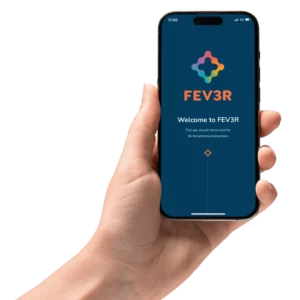
But here’s the twist: those same employees will happily use a simpler app like FEV3R.
So what’s going wrong?
The Rise of “App Fatigue” at Work
Employees today are overloaded with tools.
Project management apps. Communication platforms. HR systems. Wellness dashboards. The list keeps growing.
At some point, people stop exploring and start ignoring.
This is what we call app fatigue. And it’s one of the biggest barriers to digital health adoption.
When every tool demands attention, only the most useful ones survive. The rest? They get ghosted.
Why Most HR Health Apps Don’t Stick
On paper, many HR platforms look impressive. They offer:
- Wellness challenges
- Health tracking dashboards
- Gamified rewards systems
- Multiple integrated features
But here’s the problem: they’re built for engagement, not for urgency.
When someone feels unwell, they don’t want to:
- Log steps
- Complete a challenge
- Navigate multiple menus
They want help. Fast.
This disconnect is why HR technology trends are shifting toward simpler, utility-driven solutions.
Utility Always Beats Complexity
Think about the apps you use daily.
You don’t use them because they have the most features. You use them because they solve a problem quickly.
The same logic applies to digital benefits.
A platform that lets you:
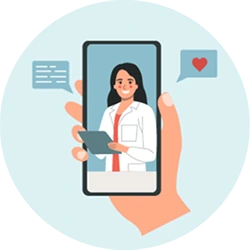
- See a doctor in minutes
- Get advice immediately
- Receive documentation without hassle
Will always outperform one that requires multiple steps just to get started.
This is the core principle behind effective digital health adoption: make it useful, or risk being ignored.
The 3-Click Rule: Why Simplicity Wins
There’s an unspoken rule in digital behaviour: if something takes more than a few steps, people drop off.
In the context of workplace wellness, this becomes even more critical.
Employees are already busy. They don’t have the time or patience to navigate complex systems when they’re unwell.
FEV3R’s approach is simple:
- Open the app
- Start a consultation
- Speak to a doctor
That’s it.
This “3-click” experience aligns perfectly with real-world needs, making digital benefits actually usable.
From Forced Engagement to Natural Usage
Many companies try to drive employee engagement through incentives:
- Rewards for completing health challenges
- Points for logging activities
- Leaderboards and competitions
While these can create short-term interest, they rarely lead to sustained usage.
Why?
Because they’re optional. And when something is optional, it competes with everything else for attention.
In contrast, health concerns are not optional.
When an employee needs medical advice, they will use whatever tool makes it easiest. That’s why platforms like FEV3R succeed where others struggle.
They align with real needs, not artificial engagement strategies.
Rethinking Workplace Wellness in Malaysia
In workplace wellness, especially within workplace wellness initiatives in Malaysia, there’s a growing realisation: employees don’t need more features, they need better access.
HR technology trends are moving toward:
- Simpler interfaces
- Faster response times
- Practical, everyday solutions
This shift reflects a deeper understanding of how digital health adoption actually works.
It’s not about building the most advanced system, it’s about building the most useful one.
Why Employees Trust What Works
Trust plays a huge role in adoption.
When employees know they can:
- Access a doctor quickly
- Get reliable advice
- Resolve issues without friction
They’re more likely to return to the platform.
This is how employee engagement becomes sustainable. Not through campaigns, but through consistent, positive experiences.
And this is where FEV3R stands out in the crowded space of digital benefits.
The Hidden ROI of Simplicity
For employers, the benefits go beyond usage rates.
Effective digital health adoption leads to:
- Reduced downtime
- Faster recovery for employees
- Less disruption to daily operations
In contrast, unused platforms offer no return, no matter how advanced they are.
By aligning with practical HR technology trends, companies can ensure their investments actually deliver value.
Less Noise, More Impact
The future of workplace wellness isn’t about adding more layers.
It’s about cutting through the noise.
Employees don’t need another app to manage, they need a solution that fits seamlessly into their lives.
That’s why utility-first platforms are gaining traction. They remove unnecessary steps and focus on what truly matters.
So… Why Are They Still Ghosting Your App?
Because it’s not solving an urgent problem.
It might be well-designed. It might be feature-rich. But if it doesn’t deliver immediate value, it won’t stick.
On the other hand, a platform that offers:
- Fast access to care
- Minimal effort
- Real, tangible outcomes
Will always win.
This is the reality of digital health adoption.
The Takeaway for Employers
If your goal is to improve employee engagement and strengthen workplace wellness, it might be time to rethink your approach.
Instead of asking:
“How can we add more features?”
Ask:
“How can we make this easier to use?”
Because in the end, the success of your digital benefits depends on one thing, whether your employees actually use them.
And sometimes, the simplest solution is the one that works best.