

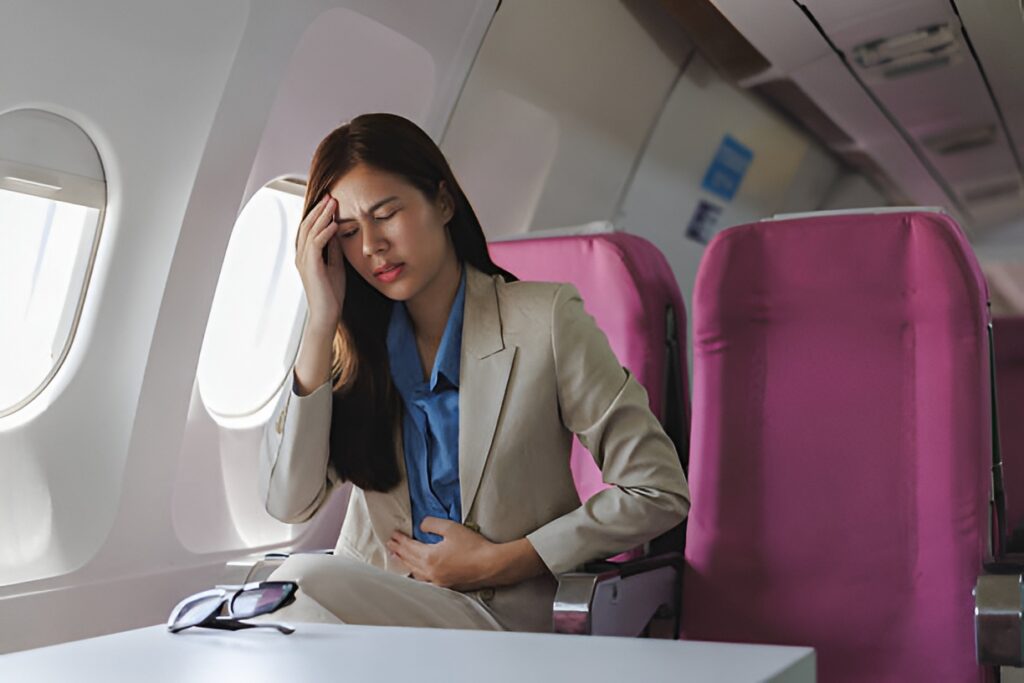
Falling ill during a work trip is common, but it is rarely planned for. For many professionals, healthcare while travelling for work only gets addressed at the last minute, often the night before an important meeting, in a city with no familiar clinics. Having a plan in place beforehand makes this far easier to manage than searching for an unfamiliar clinic under time pressure.
Common Health Issues When Travelling for Work
Work travel is associated with a distinct set of health issues that can affect an otherwise well-planned trip:
- Jet lag after a long flight
- A headache linked to disrupted sleep
- A cold picked up during travel
- A stomach reaction to unfamiliar food
- A recurring issue, such as migraines or reflux, triggered by travel stress
Individually, these issues are usually minor. On a tightly scheduled work trip, however, even a minor issue can disrupt the itinerary if it is not addressed early.
Why Being Away from Home Makes This Harder
While travelling, you lose access to your usual GP, panel clinic, and pharmacy, so any symptom has to be assessed from scratch, without a doctor who already knows your medical history. A hotel doctor call-out is often slow and expensive. Walking into an unfamiliar clinic means explaining your symptoms from scratch, waiting alongside locals who got there first, and returning with limited time to prepare before the meeting starts.
There is also the added pressure of not wanting colleagues or clients to know you are unwell. Cancelling at the last minute can look unprofessional, so many travelling employees try to self-medicate throughout the trip instead of getting properly assessed, which can prolong a short-term issue by several days.
Why Illness Has a Greater Impact While Travelling
Malaysia hosted 393 business events in 2025, generating an estimated RM4.07 billion in economic impact, a clear indication of how much business travel supports Malaysia’s economy year-round. Every one of these events depends on delegates who cannot simply reschedule their travel if they fall unwell. Missing a pitch, a signing, or a client dinner because of a treatable illness has real consequences for credibility and for the deal itself.
Falling ill during a work trip generally has a greater impact than falling ill at home, where a meeting can be postponed more easily. While travelling, that flexibility is often unavailable, so the trip usually proceeds on schedule regardless of how the traveller feels.
Managing Symptoms Before They Escalate
The goal during a work trip is to stay functional, not just to treat symptoms after they appear. A consult at the first sign of a headache or sore throat, rather than waiting until it is bad enough to affect your ability to work, is usually the difference between managing a mild symptom throughout the meeting and cancelling the meeting altogether.
While travelling for work, rehydrating, resting enough, and seeking medical advice early matter more than they do at home, because there is less room to recover slowly once you are back at your desk or in a meeting. A short consult between check-in and dinner is often enough to know whether you are dealing with something minor or something that needs more caution before tomorrow’s meeting.
What to Do If You Need Follow-Up Care
If a doctor advises rest or a short course of medication, FEV3R keeps your consultation history on record, so a follow-up with the same service back home does not mean starting from scratch. Proper documentation can also be arranged if you genuinely need to postpone or reschedule, rather than simply messaging that you are unwell.
Make It Part of How You Prepare
As business travel across Malaysia continues to grow, having a practical plan for managing minor illnesses can help professionals remain productive while on the road. This is worth incorporating into trip preparation generally, rather than only when symptoms are already apparent. A brief check-in before a long-haul flight, or after a run of back-to-back client meetings, can help spot early signs of fatigue or illness before they disrupt the schedule.
For firms that want this in place for their entire travelling workforce, FEV3R’s corporate plans go further than individual subscriptions. They include additional services, such as physical assessments, giving employers a more complete way to support employee health beyond consultations while travelling.
This is a straightforward addition to standard trip preparation, alongside routine tasks such as checking flight times or confirming hotel details.
If work travel is a regular part of your role, it is worth setting this up in advance rather than waiting until a trip is already underway. Doing so now, while there is no immediate pressure, means it will already be in place the next time it is needed.
Frequently Asked Questions
Q1. Can FEV3R deliver medication to a hotel?
Yes. Medication can be delivered nationwide to wherever you are staying, including hotels and serviced apartments, as long as a valid address is provided.
Q2. Does FEV3R work if I am travelling to East Malaysia or a smaller town?
Yes. Since consultations happen online, coverage is not limited to major cities, and medication delivery is available nationwide.
Q3. Can I get valid documentation the same day while travelling?
Yes. If a doctor determines that you are unfit for work, they will typically issue valid documentation during that same consultation.