

Consulting a doctor through WhatsApp is more common in Malaysia than most people admit. A 2026 study published in Discover Public Health on health misinformation among Malaysian social media users found that WhatsApp was cited by 42.6% of respondents as a platform where they had encountered health-related misinformation. The behaviour is widespread, and the structural issues it creates are real. Most people only encounter those issues when something has already gone wrong, which is precisely the worst moment to discover that the channel you relied on offers limited protections.
The issue is rarely the doctor. In many cases, the person responding is genuinely qualified and intends to help. The problem is the channel: WhatsApp was built for conversation, not clinical care. A platform without clinical structure has consequences that are easy to miss in the moment and much harder to resolve afterwards. Understanding those risks before you rely on an informal channel puts you in a far better position than discovering them after the fact.
Why Informal Channels Win in the Moment
WhatsApp is already on your phone. There is no new app to download, no account to create, and no queue to join. For a parent with a sick child at 11 p.m., or someone dealing with a symptom they want a quick opinion on, the path of least resistance is understandable.
But convenience and clinical safety address different problems. A conversation that feels helpful in the moment can still leave you without a documented record, without a verified prescription, and without a clear process for follow-up if the advice turns out to be incomplete or incorrect. Convenience is not a substitute for a clinical structure designed to protect you.
The Structural Risks of WhatsApp Consultations
Each of the following risks is structural, not a reflection of any individual doctor’s intentions. They are features of the channel itself.
No healthcare-specific governance framework
WhatsApp provides end-to-end encryption, but it was not designed as a healthcare platform. Clinical information, photographs, consultation histories, and medication discussions may be stored across personal devices and cloud backup services that are not specifically designed for healthcare record management and governance.Limited ability to verify clinical credentials
Without a regulated platform, it may be difficult to independently confirm whether the person you are consulting holds a current Malaysian Medical Council licence or whether any restrictions apply to their practice.No structured consultation record
A WhatsApp exchange does not automatically generate a structured medical record. The next doctor you see may have no documented history of what was prescribed, discussed, or ruled out during previous interactions.Reduced clinical accountability and auditability
Doctors remain professionally accountable for medical advice they provide. However, informal consultations may lack the documentation, audit trails, and governance processes that regulated telehealth platforms maintain, making disputes or follow-up reviews more complicated.Limited prescription oversight
Medication recommendations shared through WhatsApp may not pass through the same structured prescribing and documentation workflows used by regulated telehealth platforms. This can increase the risk of incomplete medication histories, dosing errors, or missed drug-interaction checks.
What a Regulated Platform Does That WhatsApp Cannot
A regulated telehealth platform is a clinical environment, not a messaging service with a medical theme. The differences are structural, and they work in the patient’s favour. Doctors are verified against the Malaysian Medical Council register. Every consultation creates a structured medical record. Prescriptions are documented through formal clinical workflows. Communications are managed within systems designed specifically for healthcare delivery. A formal complaints and escalation process exists if anything goes wrong. These safeguards are difficult to replicate through a general-purpose messaging platform, regardless of how qualified the person on the other end may be.
These structures are invisible when everything is fine. They become essential when something is not.
Making the Switch Is a Single Step
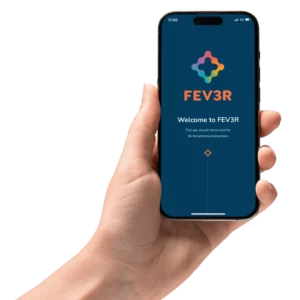
If you have been using WhatsApp for health queries, you do not need to stop asking questions. You simply need to ask them in a platform designed to manage healthcare properly. Download the FEV3R app, create a free account, and save it as your default option for health-related questions.
FEV3R runs at RM24 per month for unlimited access to licensed doctors, available around the clock. The next time a symptom appears, open the app instead of a chat thread. The conversation may take the same amount of time, but the supporting clinical infrastructure behind it is fundamentally different.
Regulatory Expectations Around Digital Healthcare
The Malaysian Medical Council’s telemedicine guidance emphasises the importance of patient verification, clinical documentation, continuity of care, and appropriate data management in digital consultations. Regulated telehealth platforms are designed to support these requirements through dedicated systems and processes.
The use of informal messaging platforms for healthcare discussions has not disappeared, but the healthcare sector is increasingly focused on improving standards for digital consultations. Choosing a regulated telehealth platform provides stronger documentation, clearer governance, and greater continuity of care.
Convenient Does Not Have to Mean Unprotected
A telehealth consultation on FEV3R can be nearly as fast as sending a WhatsApp message. The difference lies in the documentation, verification, and clinical safeguards that come with using a platform designed for healthcare delivery. Proper healthcare access does not require you to sacrifice convenience. It requires the right infrastructure behind it. That infrastructure is already available. The only step left is choosing to use it.
Frequently Asked Questions
Q1. Is it against the rules for a Malaysian doctor to consult through WhatsApp?
Not necessarily. However, doctors must still meet professional obligations relating to patient identification, documentation, confidentiality, and clinical standards. General-purpose messaging platforms may make those obligations more difficult to fulfil consistently.
Q2. What if the doctor is a trusted family friend?
Informal advice from someone you know is different from using WhatsApp as a primary healthcare access point. The risk lies in relying on an unstructured channel for diagnoses, prescriptions and ongoing care where no formal record or governance framework exists.
Q3. Can WhatsApp messages be used if there is a medical dispute?
They can be submitted but generally carry less weight than structured records and are easier to challenge on authenticity.