

That cough has been there for a while, you blamed the haze, then the air-conditioning. Then you stopped noticing it entirely. Dry, persistent, never quite bad enough to push you toward a clinic. So you have been tahan-ing, the way most Malaysians do. But in 2026, with tuberculosis cases rising across Malaysia, a cough past three weeks is not something to keep rationalising away. And you do not need a day off work to get a first medical opinion on it.
What the Numbers Are Saying
The Ministry of Health confirmed 3,161 tuberculosis cases by Epidemiological Week 6 of 2026, up nearly 10 percent from 2025. Ten active clusters were under investigation as of February 7. Sabah leads with 755 cases, followed by Selangor at 596 and Sarawak at 332. A cluster linked to a primary school in Pontian, Johor, prompted immediate contact screening in February. TB is not a historical concern. It is active and spreading in settings most Malaysians move through every day.
The Symptoms People Rationalise for Too Long
TB builds slowly, which is why most people explain it away for weeks. The early signs feel ordinary: a cough lasting more than three weeks, a low-grade afternoon fever, night sweats that soak through clothing, unexplained weight loss, and fatigue that sleep does not fix. None of these alone sends most Malaysians to a clinic. Together, sustained over weeks, they form a pattern a doctor needs to hear about.
Who Is at Higher Risk
TB spreads through the air. The MOH has flagged boarding schools, prisons, and workers’ hostels as active screening sites. People managing diabetes, HIV, or conditions affecting immunity face significantly elevated risk, as do elderly adults, young children, and close contacts of a confirmed case. If any of this applies and you have had symptoms for more than two weeks, a FEV3R check-in takes three minutes and gives you a clear next step.
What to Do Today, Without Taking Time Off Work
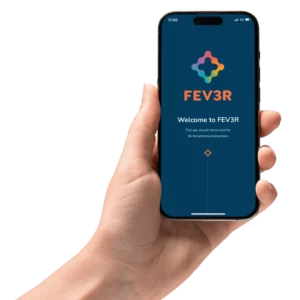
This is exactly what FEV3R is built for. Something feels off, but the hassle of getting to a clinic stops you acting on it. For RM24 per month, you get a licensed doctor within minutes, from wherever you are:
1. Get an honest assessment of your symptoms
A FEV3R doctor listens to what you have been experiencing, asks the right questions, and tells you plainly whether your symptoms need further investigation. If they do, you will know exactly what test to get and where to go. If they do not, you have that reassurance from a licensed doctor rather than from a Google search at midnight.
2. Manage your health before things escalate
You do not need to be in crisis to use FEV3R. If you are in a higher-risk group, a check-in today is a practical step. A doctor explains what to monitor, when to escalate, and how to reduce exposure at home or at work.
3. Protect the people around you immediately
If your symptoms are assessed as potentially TB-related, the immediate question is practical: how do you limit exposure to family while waiting for test results? A FEV3R doctor walks you through that straight away, without alarm.
Why Acting Early Is the Only Version That Works
Tuberculosis is highly treatable when caught early. What determines outcomes is not severity at diagnosis. It is how long symptoms went unaddressed before someone got a medical opinion. If your cough has been there three weeks, your energy is consistently off, or you are waking up soaked in sweat, do not push it to next week. It may be nothing. If it is something, finding out now is the only version that works.
Key Takeaways
- Malaysia recorded 3,161 tuberculosis cases by Epidemiological Week 6 of 2026, up nearly 10 percent from the same period last year. Ten active clusters are currently under investigation nationwide.
- High-risk settings include boarding schools, prisons, and workers’ hostels. People managing diabetes, HIV, or weakened immunity face significantly elevated risk.
- TB is curable when caught early. What determines outcomes is how quickly someone gets a medical opinion. A FEV3R doctor can assess your symptoms today, without a clinic visit or a day of leave.
Frequently Asked Questions
Q1.Can tuberculosis be diagnosed through a telehealth consultation?
No. TB requires a sputum culture, chest X-ray, or skin and blood tests, none of which can be done through telehealth. A FEV3R doctor can assess your symptoms, advise whether testing is needed, and refer you to the right facility.
Q2. I have been in contact with someone who has TB. What should I do?
Get a medical opinion even without symptoms. TB can remain latent, meaning it is present without causing active illness. A FEV3R doctor can advise whether you need testing and what signs to watch for.
Q3. Is tuberculosis curable?
Yes. TB is treated with antibiotics over six months. Completing the full course is essential, because stopping early risks the infection persisting or becoming drug-resistant. A FEV3R doctor can walk you through what treatment involves.