

Somewhere along the way, HR platforms became… complicated.
What started as tools to support employees have evolved into massive ecosystems filled with dashboards, gamification features, wellness challenges, and endless tracking metrics. On paper, it all sounds impressive. But in reality?
Most employees just want to see a doctor and get an MC without jumping through hoops.
This is where the conversation around HR technology trends is shifting. Employers are beginning to realise that more features don’t always mean more value. Sometimes, doing less but doing it faster is exactly what drives real employee engagement.
When “More Features” Becomes the Problem
Modern HR systems often try to do everything:
- Track steps and fitness goals
- Run wellness challenges
- Provide mental health content
- Integrate multiple dashboards
But here’s the issue: complexity doesn’t equal usage.
Employees don’t wake up thinking about dashboards. They think about solving immediate problems. A migraine before work. A child falling sick. A sudden fever in the middle of the night.
In these moments, digital benefits need to be simple, fast, and reliable.
That’s why companies re-evaluating HR technology trends are starting to ask a critical question: Are we solving real problems, or just adding features?
The Reality of Employee Needs
Let’s be honest, most employees don’t want to “engage” with healthcare platforms the way they engage with social media.
They don’t want badges.
They don’t want streaks.
They don’t want to navigate five tabs just to book a consultation.
What they want is straightforward:
- Access to a doctor
- Quick medical advice
- A valid MC when needed
This is where digital health adoption becomes meaningful. It’s not about adding more layers, it’s about removing friction.
And when companies align their digital benefits with actual employee needs, employee engagement becomes a natural outcome and not something forced through gamification.
Speed Is the New Currency
In today’s workplace, speed matters.
An employee who can resolve a health issue in 10 minutes is far more likely to stay productive than someone who spends half a day visiting a clinic. This is especially relevant in workplace culture Malaysia, where long clinic queues and travel time can disrupt an entire workday.
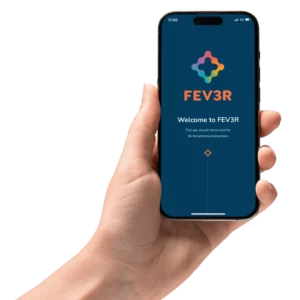
FEV3R addresses this gap with:
- 24/7 doctor access
- Fast online consultations
- Immediate guidance and digital documentation
This approach reflects a deeper understanding of HR technology trends that efficiency is more valuable than complexity.
Simplicity as a Retention Strategy
Retention isn’t just about salaries anymore. It’s about how supported employees feel.
When healthcare is difficult to access, it creates friction. When it’s simple, it builds trust.
A streamlined digital health adoption strategy signals that a company respects its employees’ time and wellbeing. It shows that the organisation is focused on real solutions, not just ticking boxes.
This directly impacts employee engagement. Employees are more likely to stay in environments where support systems actually work, especially when it comes to health.
In the context of workplace culture Malaysia, where family and wellbeing are highly valued, this becomes even more critical.
Cutting Through the Noise with FEV3R
Instead of trying to be everything, FEV3R focuses on doing a few things exceptionally well.
At its core, it delivers:
- Reliable 24/7 doctor access
- Quick consultations without unnecessary steps
- Digital MCs and prescriptions when needed
This simplicity is what sets it apart in the crowded space of HR technology trends.
By prioritising speed and usability, FEV3R supports companies looking to enhance their digital benefits without overwhelming their teams.
Why Employees Actually Use Simple Systems
Adoption is the ultimate test of any HR solution.
You can invest in the most advanced platform, but if employees don’t use it, it holds no value.
Simple systems win because they:
- Require minimal learning
- Solve immediate problems
- Fit naturally into daily routines
This is the essence of effective digital health adoption. It’s not about forcing behaviour but it’s about making the right behaviour effortless.
And when employees consistently use a platform, employee engagement becomes organic.
The Hidden Cost of Overcomplication
Bloated HR systems don’t just confuse employees, they cost companies more in the long run.
Time spent navigating complex platforms is time lost. Frustration leads to disengagement. And disengagement eventually impacts productivity and retention.
In contrast, streamlined digital benefits reduce these hidden costs.
For businesses in Malaysia, aligning with practical HR technology trends means focusing on tools that deliver measurable impact, not just impressive features.
A Better Way Forward for Malaysian Workplaces
The future of workplace culture Malaysia is not about adding more layers, it’s about refining what already exists.
Employers are beginning to recognise that:
- Simplicity improves adoption
- Speed enhances productivity
- Accessibility builds trust
By embracing focused digital health adoption, companies can create environments where employees feel genuinely supported.
And that support doesn’t need to be complicated, it just needs to work.
Doing Less, But Delivering More
The idea that “more is better” doesn’t always hold true, especially in HR tech.
Sometimes, the most impactful solutions are the ones that strip away the unnecessary and focus on what truly matters.
FEV3R embodies this shift in HR technology trends by offering straightforward, effective healthcare access that employees actually use.
Because at the end of the day, no one remembers how many features your HR platform had.
They remember whether it helped them when they needed it most.
For companies looking to improve employee engagement, strengthen workplace culture Malaysia, and optimise their digital benefits, the answer might not be adding more.
It might just be simplifying everything.