

Your mum just forwarded a voice note to the family group chat. Apparently, a specific herb boiled with honey clears chest infections faster than antibiotics, and someone’s doctor friend confirmed it. Your cousin is already asking where to buy it. You screenshot the message and are about to Google the herb when something makes you pause.
Why Health Misinformation Spreads So Fast in Malaysia
Malaysia has one of the highest social media penetration rates in Southeast Asia. By 2024, over 97% of the population was online and more than 83% were active on social media daily. Health advice, accurate or otherwise, travels through trusted channels like family group chats at the same speed as everything else.
The consequences are measurable. Misinformation about vaccines contributed to measles cases in Malaysia nearly doubling from 2023 to 2024, with recorded outbreaks rising from 112 to 231 in a single year. Children were hospitalised because their families acted on content that felt credible. That is the real cost. Not a cautionary statistic, but a category of harm that is entirely preventable with one extra step.
Five Questions to Ask Before Acting on Any Health Tip
Before trying anything you received rather than researched yourself, run through this checklist:
- Where did this originate? The further a health claim has travelled from its source, the less reliable it becomes. A forwarded voice note with no credited author or original link is not a clinical source, regardless of how confidently it is shared.
- Does it align with MOH guidance? Malaysia’s Ministry of Health publishes evidence-based information at moh.gov.my. If a viral tip contradicts established clinical guidance or encourages stopping prescribed medication, the burden of proof sits firmly with the tip.
- Is someone selling something? A large share of viral health content is a product promotion wearing the clothes of advice. If the message points toward a supplement or MLM item, the information is not neutral.
- Does it make extreme claims? Any remedy promising to cure, permanently reverse, or eliminate a condition through a simple at-home method is rarely clinically supported. Responsible health guidance uses measured, specific language, not sweeping promises.
- Is the doctor real and traceable? Not a friend of a friend, but a named practitioner whose credentials are searchable on the Malaysia Medical Council register at mmc.gov.my. An unverifiable endorsement carries no clinical weight.
Two Checks to Do Before Anyone in the Family Tries It
If a product is involved, check it at npra.gov.my. Every health supplement legally sold in Malaysia must be registered with the National Pharmaceutical Regulatory Agency. If the product is not listed, it has not been assessed for safety or effectiveness, regardless of how enthusiastic the group chat is about it.
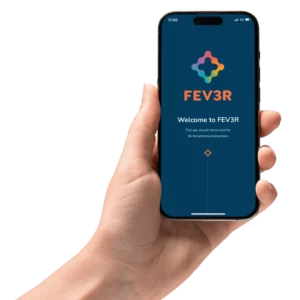
Then ask a FEV3R doctor directly. Not to validate the tip, but to get a real clinical answer to the underlying health question. If someone in your family has a chest infection, a FEV3R consultation takes less time than searching for the herb your cousin is already trying to order. That is what everyday healthcare access means in practice: a reliable option that does not depend on forwarded voice notes.
How to Make This a Daily Health Habit
The problem with health misinformation is that it keeps arriving. Each message comes through someone you trust: your aunt, your colleague, someone who genuinely means well. Once you know the five questions and have a doctor you can consult anytime, you stop being uncertain about which messages to act on and which to set aside.
FEV3R gives you that option every day of the year. Not just for serious illness, but for the regular moments when something lands in your group chat and you want a real answer before someone in your family decides to try it.
The Rule That Works for Every Group Chat
The next time something lands in your chat claiming to treat an illness faster than a doctor can, run the five questions. If any answer raises a concern, check the product register and consult a FEV3R doctor before anyone acts on it. That habit costs nothing and prevents a category of harm that is entirely avoidable.
Ask a Real Doctor Instead of Guessing
Health question? Not sure about something you read online? Ask a FEV3R doctor directly, any time. Real answers for RM24 a month. [Ask a doctor now]
Frequently Asked Questions
Q1. How do I check if a health supplement is safe and legal in Malaysia?
Search the product name at npra.gov.my. All legitimate health supplements sold in Malaysia must be registered with the National Pharmaceutical Regulatory Agency. If a product is absent from that database, it has not been assessed for safety or quality and should not be used.
Q2. Are traditional Malaysian remedies safe alongside prescribed medication?
Some are appropriate as supportive measures and carry minimal risk. Others interact with prescribed medication or affect organ function in ways that are not obvious. Tell your doctor about any traditional remedy you are taking. A FEV3R consultation handles that conversation without requiring a separate clinic appointment.
Q3. I already tried a viral remedy and now feel worse. What should I do?
Stop immediately and consult a doctor. Describe what you took, the quantity, and how long you took it for. A FEV3R doctor can advise whether you need in-person care or can be monitored at home. If symptoms are severe, seek emergency care without delay.